

Ceramics of Italy’s 5-part Spring-Summer 2026 Trend Report concludes with Form & Function. Here physical shape and purpose come together. This trend is not just about how a space looks, it’s about how it works. Thanks to its inherent qualities, Italian tile is redefining this role, moving far beyond backsplash and into a high-performance architectural skin.
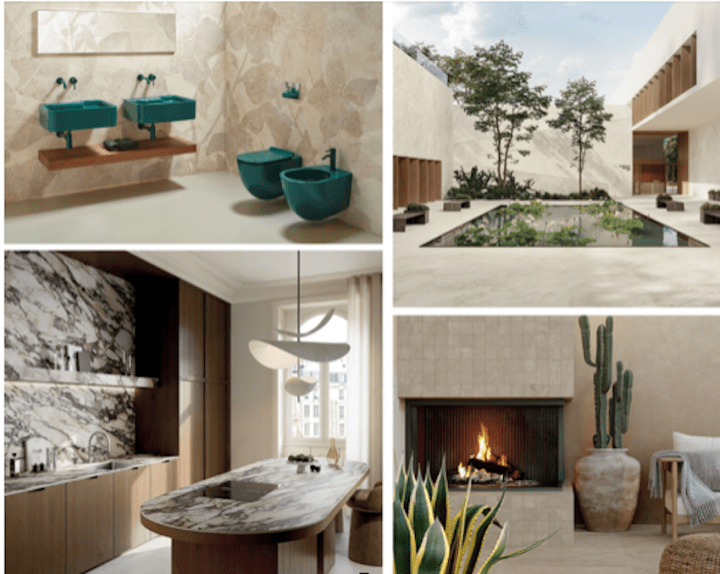
In the bathroom, tile has always been a natural choice for its water resistance, antibacterial and low maintenance properties. Now, designers are taking it further with tile drenching; wrapping floors, walls, and even ceilings in a single tile or tonal pattern.


The result is a spa-like environment that is both practical and immersive, featuring prefabricated washbasins and vanities from premier Italian brands such as La Fabbrica’s Moon Cream and Atlas Concorde’s Nyra Habitat. In the kitchen, porcelain’s non-porous, heat- and scratch-resistant qualities are driving a surge in demand for large-format slabs as countertops. As opposed to other surface materials, it resists liquids, chemicals, and acids, preventing stains from setting.


Pushing innovation forward, these slabs are now being paired with invisible induction cooktops, as seen in new offerings from ABKStone, Atlas Plan and in Ceramiche Coem’s Immensa collection, with induction coils embedded beneath the surface, allowing for cooking directly on the countertop. In living spaces, heat-resistant options – such as Casalgrande Padana’s Elements collection – are being applied across fireplace surrounds, while large-format options are also being fabricated into dining, coffee, and conference tables, including MATERIA’s Daino Reale and Shape by Ceramica Fondovalle.


Unlike natural marble, porcelain resists etching and staining from spilled drinks, making it virtually indestructible. Tile also moves seamlessly outdoors, resisting moisture, temperature changes, and UV exposure without fading. While wood or vinyl may typically sun-bleach, this makes it ideal for pavers and high-traffic areas like pool decks and patios, as seen in new collections such as Tufo by Cerdomus, Solaris by Cotto d’Este, Trevi by Ceramiche Keope, and Menhir by Ceramiche Supergres. Additionally, architects are also specifying porcelain for exterior façades, where it acts as a protective layer against UV rays and moisture while extending the interior aesthetic outward.
More at: https://www.italytile.com/